Moscow
All the Old KnivesMoscow is the site of the political and personal rupture that defines Henry Pelham’s departure from Russia: the Dubrovka Theater siege and its aftermath expose the cost of cooperation with the FSB, while the surrender of one of Henry’s sources leaves Ilyas Shishani to disappear. The city persists in the novel less as a place Henry can return to than as a chapter of “grinding duplicity” whose associations follow him into Vienna and shape his capacity for intimacy.
Political Crisis and Its Aftermath
Moscow’s defining historical event in Henry’s account is the late-October 2002 hostage siege at the Dubrovka Theater, during a performance of Nord-Ost, a Russian version of Les Misérables. More than fifty Chechen Islamic militants seized the theater and held 850 people, demanding the withdrawal of Russian troops from Chechnya. After 57 hours, Russian forces pumped gas into the building before entering. Nearly all the militants died, along with 129 hostages; most of the hostages’ deaths resulted from the gas and the failure to tell treating doctors precisely what they had inhaled.
The response became a test of political judgment beyond the theater. American officials and the embassy initially condemned Russian Special Forces for the deaths, including that of an American hostage from Oklahoma City who had come to meet his Russian fiancée. But Vladimir Putin invoked the threat of international terrorism, drawing a comparison with the attacks that had destroyed the World Trade Center the previous year. Washington softened its position. Henry’s station chief, George Lito, warned that silence would help clear the way for a deeper Russian campaign in Chechnya. Russian troop reductions were soon reversed, and large-scale operations resumed in Grozny and elsewhere.
Moscow’s political atmosphere is further complicated by an investigation into the siege. A group of politicians, journalists, and former FSB officers concluded that the security service had used at least one agent provocateur, Khanpasha Terkibayev, to direct the militants to the theater. Sergei Yushenkov, a liberal politician who interviewed Terkibayev about his involvement, was shot dead in Moscow; Terkibayev later died in a car accident in Chechnya. The sequence feeds Henry’s anger and disillusionment, but the account does not establish that either death was ordered by the government or caused by the investigation.
Henry Pelham's Service in Moscow
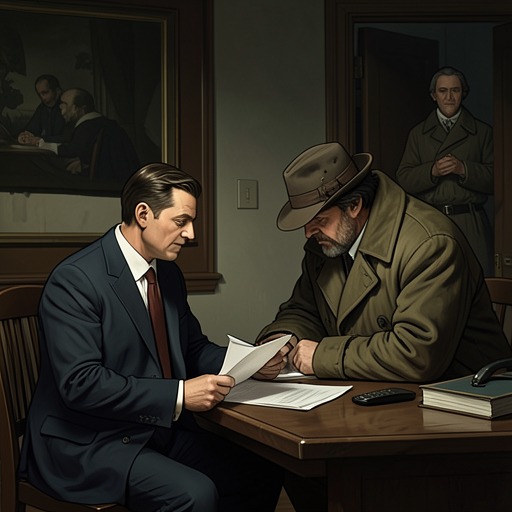
The siege’s aftermath draws Henry into work that conflicts with his judgment. Under orders, the American station assists the FSB in identifying anti-Putin and pro-Chechen activists in the United States. Henry also meets with Russian agents to discuss the embassy’s dealings with human-rights organizations that challenge official accounts of events. The work makes Moscow a setting where intelligence cooperation is not an abstraction: it requires Henry to help a security service scrutinize its critics.
The personal cost becomes clearest when George Lito directly orders Henry to hand over Ilyas Shishani, a Chechen source who had given the Americans privileged access to Moscow’s closed Chechen community over the preceding year. Henry complies. Soon afterward, Ilyas disappears. Henry responds to the political reversal and his own participation by sending an angry cable to Langley, placing his objection on the record, and requesting a transfer to a quieter post. His departure is therefore both a reaction against the policy and an acknowledgement that he has already been implicated in it.
Sources, Betrayal, and Return
Moscow also contains the beginning of the connection Henry later describes as a pact with Ilyas. He remembers meeting him in the back room of a bakery in the Arbat District, offering him Marlboros, and speaking confidently about American trust. In retrospect, that gesture sits beside the later order to surrender Ilyas’s name: a personal language of trust becomes entangled with an institution’s demand for information and the source’s unexplained disappearance.
Four years after Ilyas vanishes, he reappears in Vienna, not in Moscow. At their meeting in the closed café at Schönbrunn Palace, Henry recognizes an older, fitter version of the man he knew in Russia. He accepts Ilyas’s embrace and a bottle of Coca-Cola, but his recognition is accompanied by fear. Ilyas remains one of the few Moscow figures Henry had genuinely liked, yet he is also inseparable from the conversations and compromises that ruined Henry’s time there. The encounter makes the city’s past physically present without taking Henry back to it.
Memory Beyond the City
Moscow’s reach is especially visible on December 7, 2006. Anna Politkovskaya had been murdered in her Moscow elevator two months earlier; Aleksandr Litvinenko had died in London two weeks earlier after a month-long public struggle following polonium-210 poisoning. Henry does not regard these deaths as his fault. What unsettles him is their association with the Russian chapter of his life: news coverage draws him back into the duplicity through which he understands that period.
At home, he responds by hiding under a pillow when Celia Favreau looks down at him, then scolding himself for pushing her away. For weeks, newspapers and Internet sites have kept bringing Moscow back to him. He refuses to speak about it, afraid that talking would make the past more real. This withdrawal carries the city’s consequences into his private life: Moscow is not merely the place he left, but an experience that obstructs his attention to Celia even when he knows he cares about her.
The novel later connects that history to the end of Henry’s relationship with Celia and to the final call from Ilyas after the sarin has killed everyone aboard Flight 127. Looking back, Henry locates the loss of control in the beginning of his entanglement with Celia and in the pact with Ilyas, which he links to love and guilt. The recollection reaches further back to the Arbat bakery and the promise of trust. Moscow thus anchors a chain of choices whose consequences travel across years and borders: the city remains the point where Henry’s public compromises and private attachments first become inseparable.